|
Michael McFadyen's Scuba Diving - Layag Layag, Philippines
In August 2023 I did a three week long dive trip to the Philippines with my friend John. We spent the first week at Anilao staying at Buceo Anilao Dive Resort.
There are dozens of dive sites located within 20 minutes run from the resort.
Unfortunately we had a Super Typhoon hit the northern Philippines when we were there, so the Coast Guard banned all boats and diving later in the week. We decided to come back again as we didn't even do half the dive sites there are in the area, so in 2025 we spent two weeks here. This is a site we did on the second trip.
Layag Layag is located on the western side of the northern tip of Caban Island, just around the corner from Kirbys Rock. It is about 4.5 kilometres west of the resort and takes about 20 minutes to get there. A GPS mark for the dive spot is 13° 41' 30.271" N 120° 50' 29.144" E (using WGS84 as the datum).
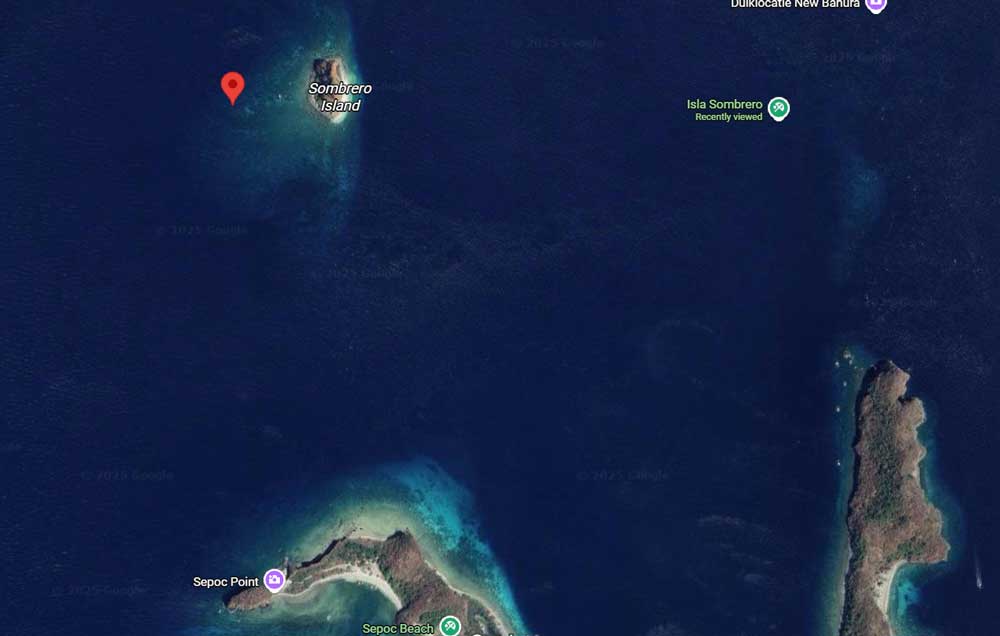 |
A satellite photo from Google Earth. The island on the right is Caban Island and the dive site is just to the left of the tip.
Buceo Anilao Resort is way off to the right out of view. |
The northern tip of Caban Island has bommies that come right to or near the surface from as deep as 40 metres. On the western side, there are three rocks that come up from around 12 metres. The dive boats anchor in the shallows to the south of the rocks. Once we enter the water we drop to six metres and then head west. The bottom drops fairly quickly to 22 metres where it levels out a bit. We head north from here.
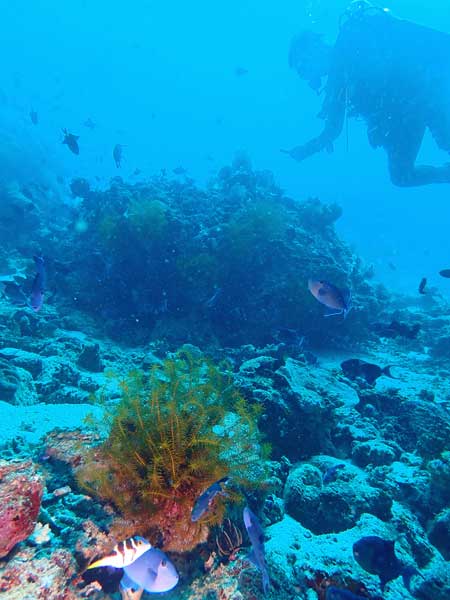 | 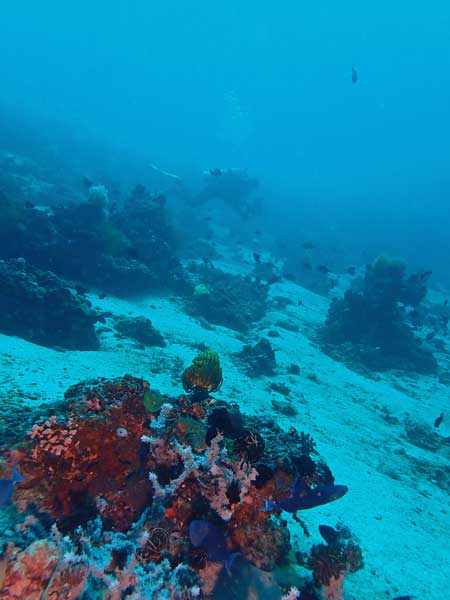 |
| The reef at the start of this dive | Another photo, again looking south |
The bottom here is sandy with coral rubble. A bit further on it becomes more solid coral. After 30 or 35 minutes we area almost heading east but there is a bit of a current from that direction, so we head shallower towards the rocks and head back towards the anchor by going in between the rocks.
All along the reef there are thousands of niger (blue) triggerfish. This is a very colourful dive site, with lots of coral, featherstars, gorgonias and sponges. Along the way we see quite a few lionfish and many moray eels of various species.
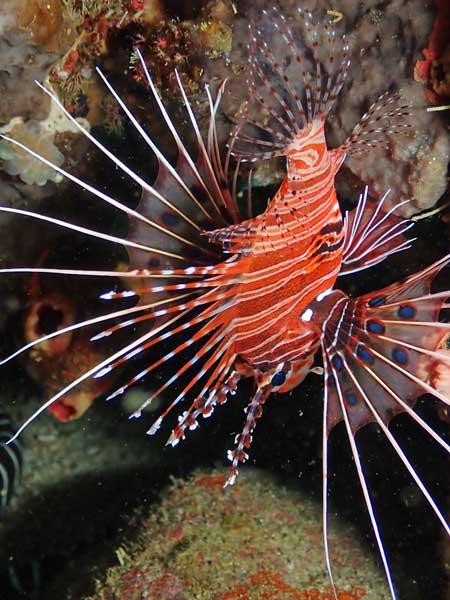 | 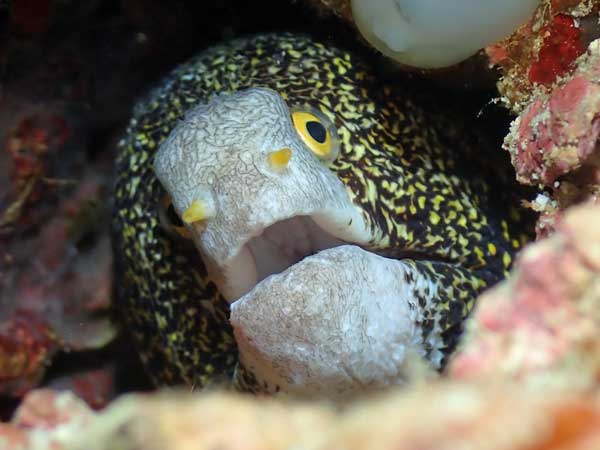 |
| One of many lionfish we saw | A spotted moray eel |
We also see two banded sea snakes, a large octopus and lots of nudibranchs and shrimps. There are also plenty of fire urchins, some of which have Coleman shrimps on them. These are a commensal shrimp and sometimes they are in pairs. They make a great subject for a photograph.
There are also some medium sized clams, small crabs and quite a few nudibranchs.
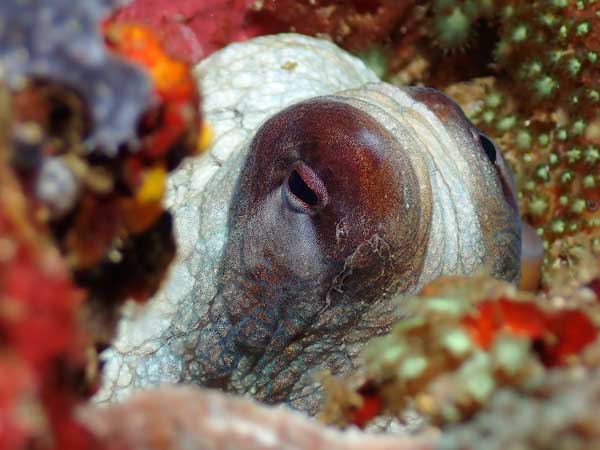 | 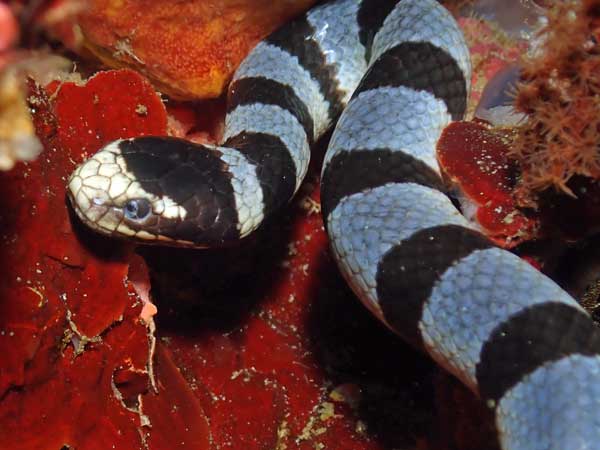 |
| A large octopus we saw | One of the two banded sea snakes |
After a bit over an hour, we are back under the boat for our safety stop. This was a really good dive. Water temperature was 28C in October and the visibility was very good, around 15 to 20 metres.
MORE PHOTOS
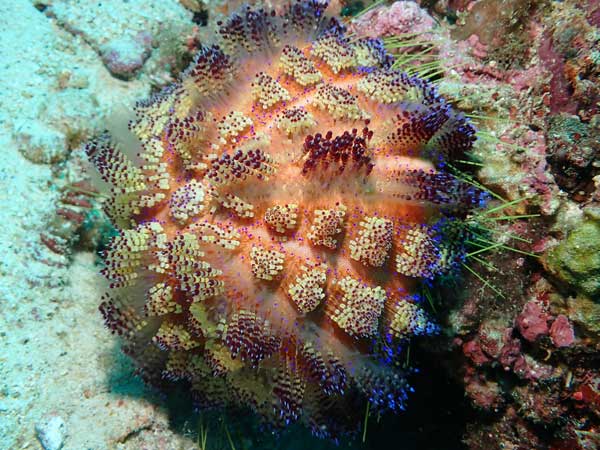 | 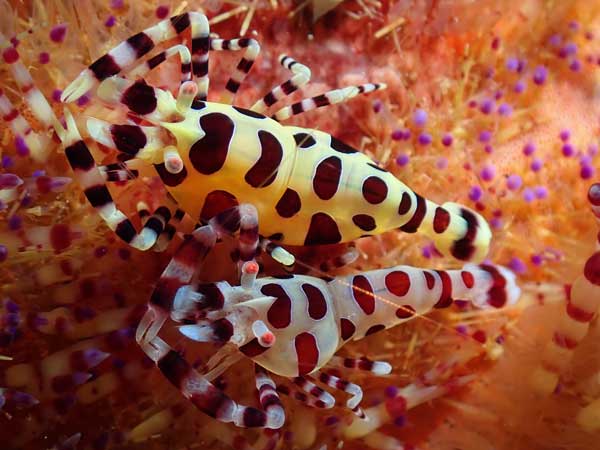 |
| A fire urchin | Two Coleman Shrimps (Periclimenes colemani) on a fire urchin |
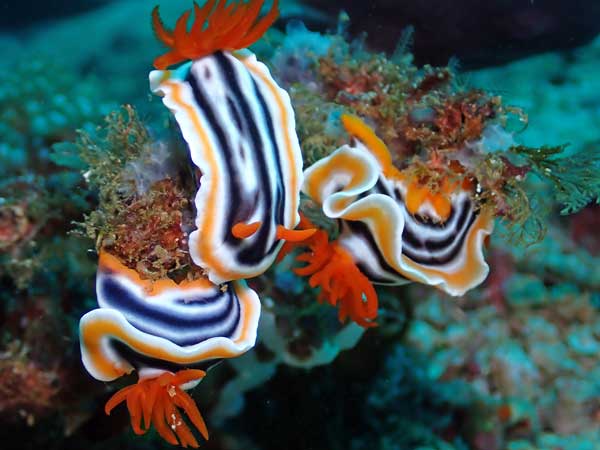 | 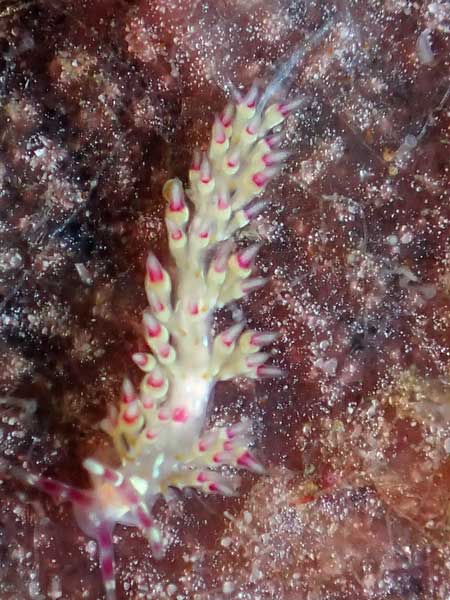 |
| Three magnificent chromodoris Chromodoris magnifica | I think this is a white-lined flabellina |
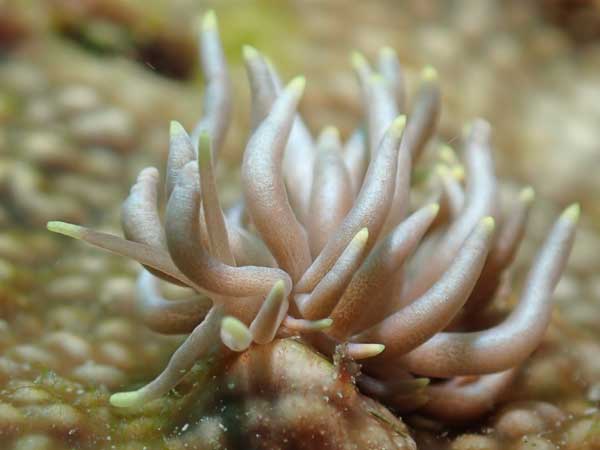 | 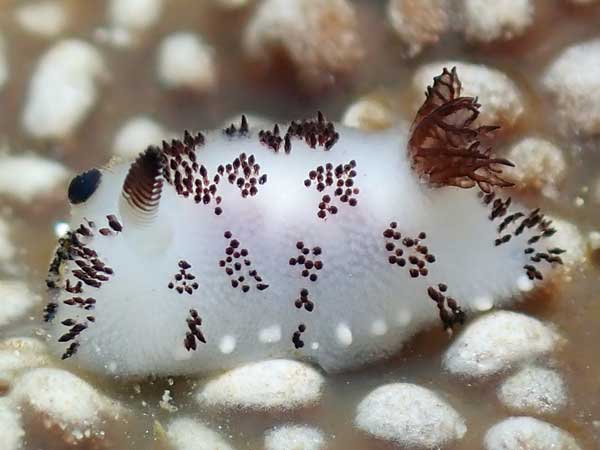 |
| Briareum Phyllodesmium (Phyllodesmium briareum - note may have changed genus) | Funeral jorunna (Jorunna funebris) |
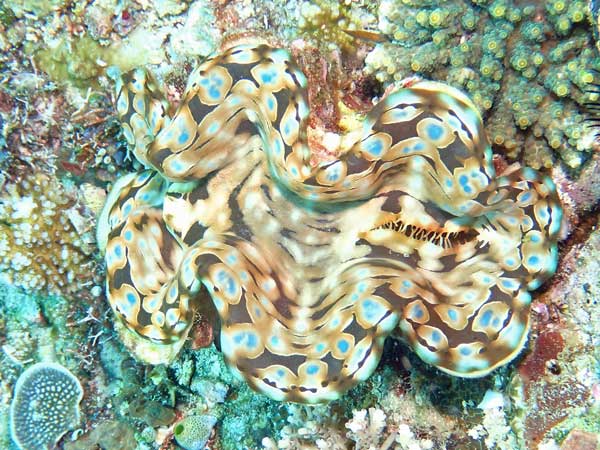 | 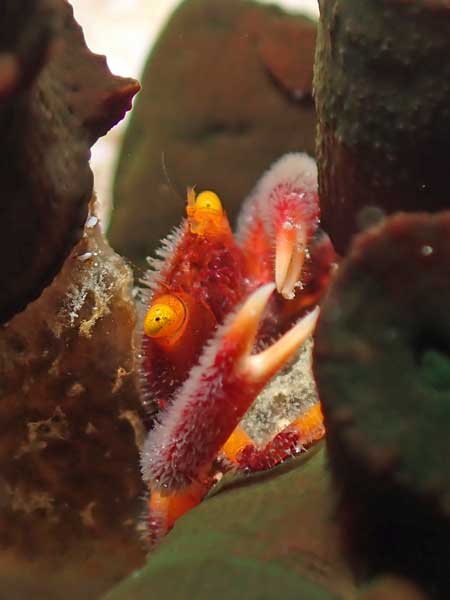 |
| A medium size clam | A small crab in a hard coral |
| 



 v6.00.307 © 2003-2005


