|
This dive site was discovered by St George Scuba Club member, Phil Short in about 2012. He found it when running back to Port Hacking from a dive at Marley Point. When he ended up diving it, he named it after his wife Mary who was diving with him the day he found it.
The site is located towards Marley Point and consists of a flat reef top with a wall that runs mostly east-west, turning towards the north on the eastern side. From Port Hacking, turn right and head on down past Barrens Hut and The Balcony. It is located at GPS 34° 06.4906' S 151° 09.4142' E (using WGS84 as the datum). The depth at the mark is about 16 to 17 metres and this is on the top of the reef. If you go a little to the south it drops to just over 20 metres and sand.
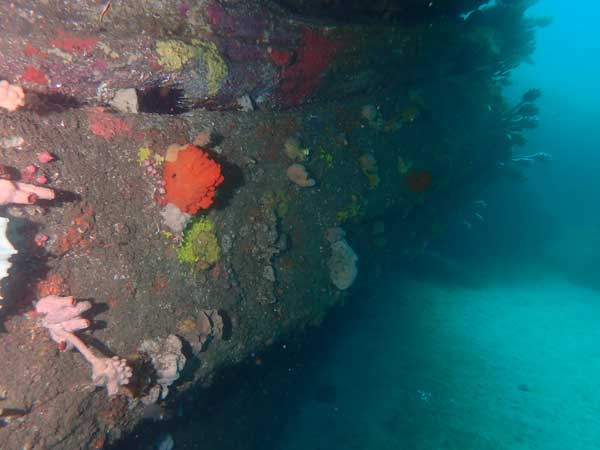 | 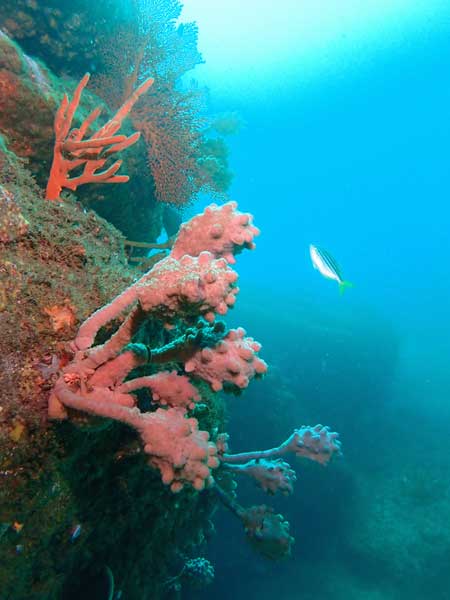 |
| This is the overhang just to the east of the anchoring spot | A bit further along, you can see these sea tulips in the photo at left |
Once at the GPS mark, if the wind is from the south, head south till the reef drops from 16 metres to about 20 metres. Anchor here. If the wind is from any other direction, drop anchor right on the reef top. Make sure you let out a lot of line as if the anchor moves off the top, you will need more line so you can hook it in.
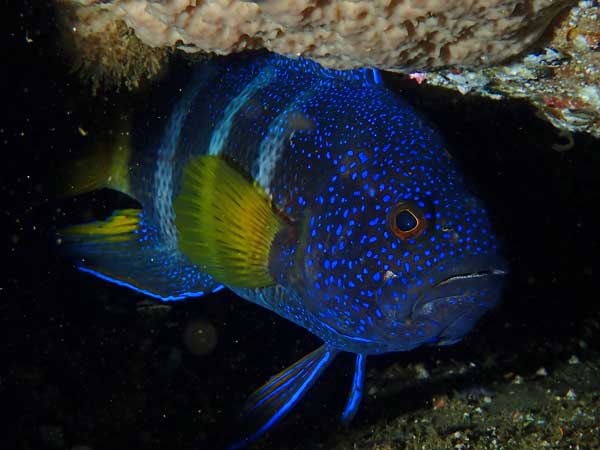 | 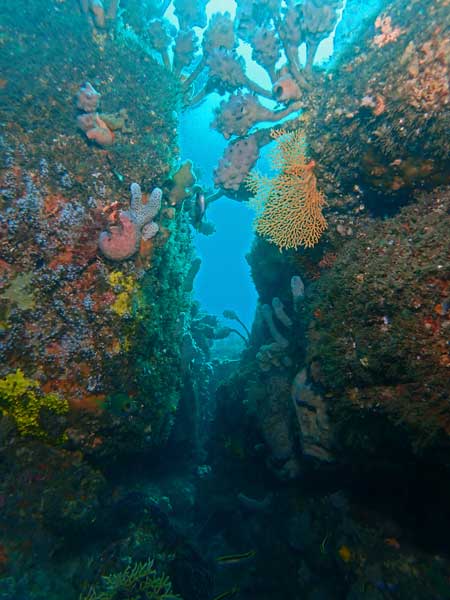 |
| A blue devilfish in a small overhang just past the larger overhang above | One of the smaller cracks off the main wall, very colourful |
From the anchor, head south till you drop over the wall. In a southerly, you may need to pull the anchor up from the sand and put it on the reef as the rope might be rubbing on the rocks. The wall here is a shear drop of over three metres. There are lots of sea tulips and sponges all along the wall, as well as a few nice gorgonias.
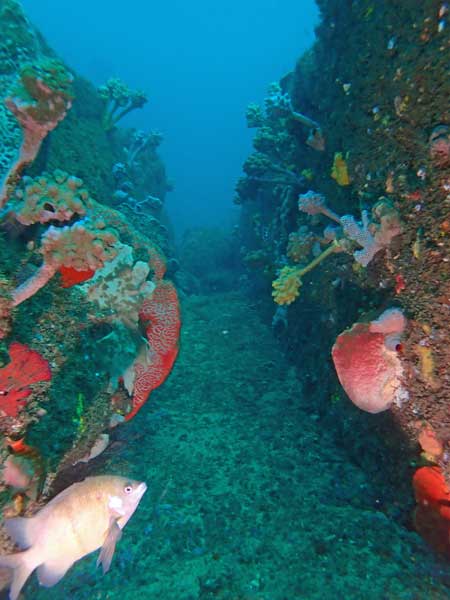 | 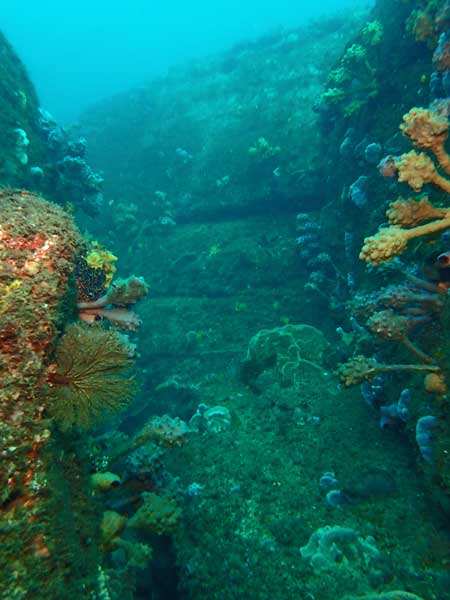 |
| This small gutter runs back into the reef and is a bit off the sand edge | Back towards the anchoring spot from the photo at left, a larger gutter |
Once over the wall, head east. After about 20 metres there is a large overhang which is normally home to lots of one-spot pullers and in autumn, Port Jackson sharks. There is also a small overhang and right on the sand we have seen an eastern blue devilfish in there. Just past here the wall becomes a jumble of large boulders and some wall sections. A bit further on there are some large rocks off the wall. On the way out, go on the outside of the rocks. This site also has a lot of leatherjackets and seapike, and we have seen huge bullrays here as well.
About 30 metres past the cave the reef starts to turn a bit towards the north-east. Around this part there are a lot more boulders off the wall. After another 20 or so metres there are plenty of large boulders that create gutters and small gullies. There are lots of Port Jackson sharks in these gutters during August to October. Just past here you will probably need to turn around. The depth reaches about 24 metres on the sand here.
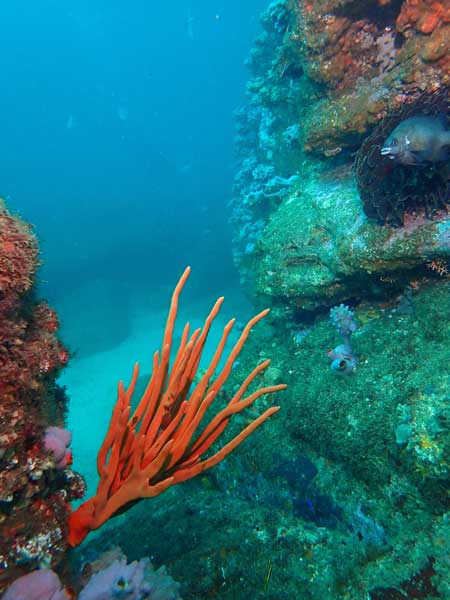 | 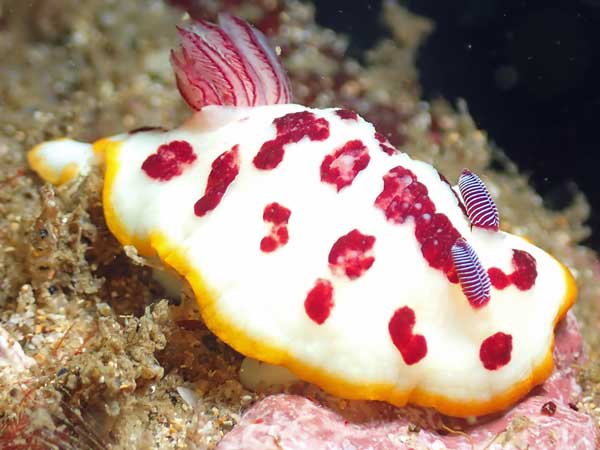 |
| Coming back to the sand from some of the gutters | Splendid Chromodoris |
On the way back swim a bit shallower and come back through the various gutters you will see. There is a large low cave/overhang that I think I once swam through but in 2025 it was not high enough (more sand on the bottom).
Eventually you should return back to the main wall proper near the overhang you first encountered. Follow the wall back to the anchor. You should still have time to keep going so continue on to the west. About 20 metres past the anchor there is another larger overhang/cave. This is bigger than the previous one. The depth on the sand comes up to about 17 to 18 metres. This cave is also full of one-spot pullers and mados.
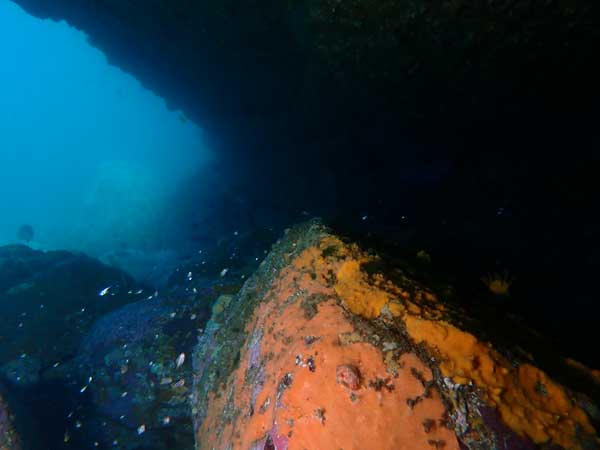 | 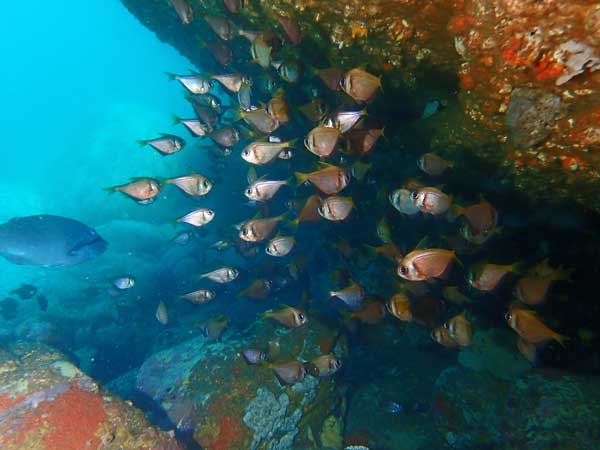 |
| This is the larger overhang just to the west of the anchoring spot | Further west from the photo at left |
At the end of the cave, come up to the top of the reef which here is about 14 metres. Follow the top back to the east to the anchor. Spend any remaining bottom time in this area. You should get a bottom time of about 30 to 35 minutes on air and 40 to 45 minutes on 32% nitrox.
This is an excellent dive site, one of the best ones our club has found in the past 15 years. Unfortunately, like all the other dive sites south of Botany Bay, there is no charter boat that dives here. The only way you can dive is with a private boat or as a member of a club which has access to a boat or two.
| 



 v6.00.307 © 2003-2005


